Offset Lithography
The dominant industrial printing process. It relies on the chemical repulsion of oil and water rather than physical relief or impression.
The Physical Mechanism
Lithography operates on a flat (planographic) surface. The image area on the aluminum plate is chemically treated to be oleophilic (ink-receptive) and hydrophobic (water-repellent). The non-image area is treated to be hydrophilic (water-receptive) and oleophobic (ink-repellent).
The Three-Cylinder System
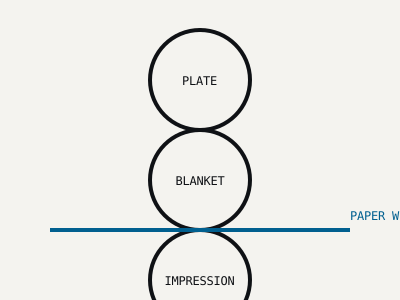
- Plate Cylinder: Holds the imaged aluminum plate. It rotates past dampening rollers (applying fountain solution to non-image areas) and then inking rollers (applying oil-based ink to image areas).
- Blanket Cylinder: A rubber blanket receives the ink from the plate cylinder. This "offsetting" step reduces wear on the expensive metal plate and allows printing on textured surfaces.
- Impression Cylinder: Provides the back-pressure needed to transfer the ink from the rubber blanket onto the substrate (paper).
Dot Gain Characteristics
Because ink is transferred mechanically twice under pressure, the physical halftone dots spread. A 50% dot on the plate typically prints as a 64-68% dot on coated paper. This Tone Value Increase (TVI) must be compensated for via curve adjustments in the RIP software before plate imaging.
Frequently Asked Questions
Why is it called "Offset"?
The plate never touches the paper. The image is "offset" onto a rubber blanket first. This protects the delicate plate from abrasive paper fibers and conforms better to textured paper surfaces.
What is the difference between Web and Sheetfed?
Sheetfed presses feed individual pre-cut sheets of paper (ideal for medium runs and heavy stock like packaging). Web presses feed continuous rolls of paper at extremely high speeds (ideal for catalogs, newspapers, and very high-volume runs).
Process Limits
- Max Speed (Sheetfed) 18,000 sph
- Line Screen 150 - 300 lpi
- Setup Cost High (Plates required)
- Variable Data None
Next Topic
Compare with Flexography →